Blog
Found a Beehive at Your Tempe Home? Read This Before You Do Anything.
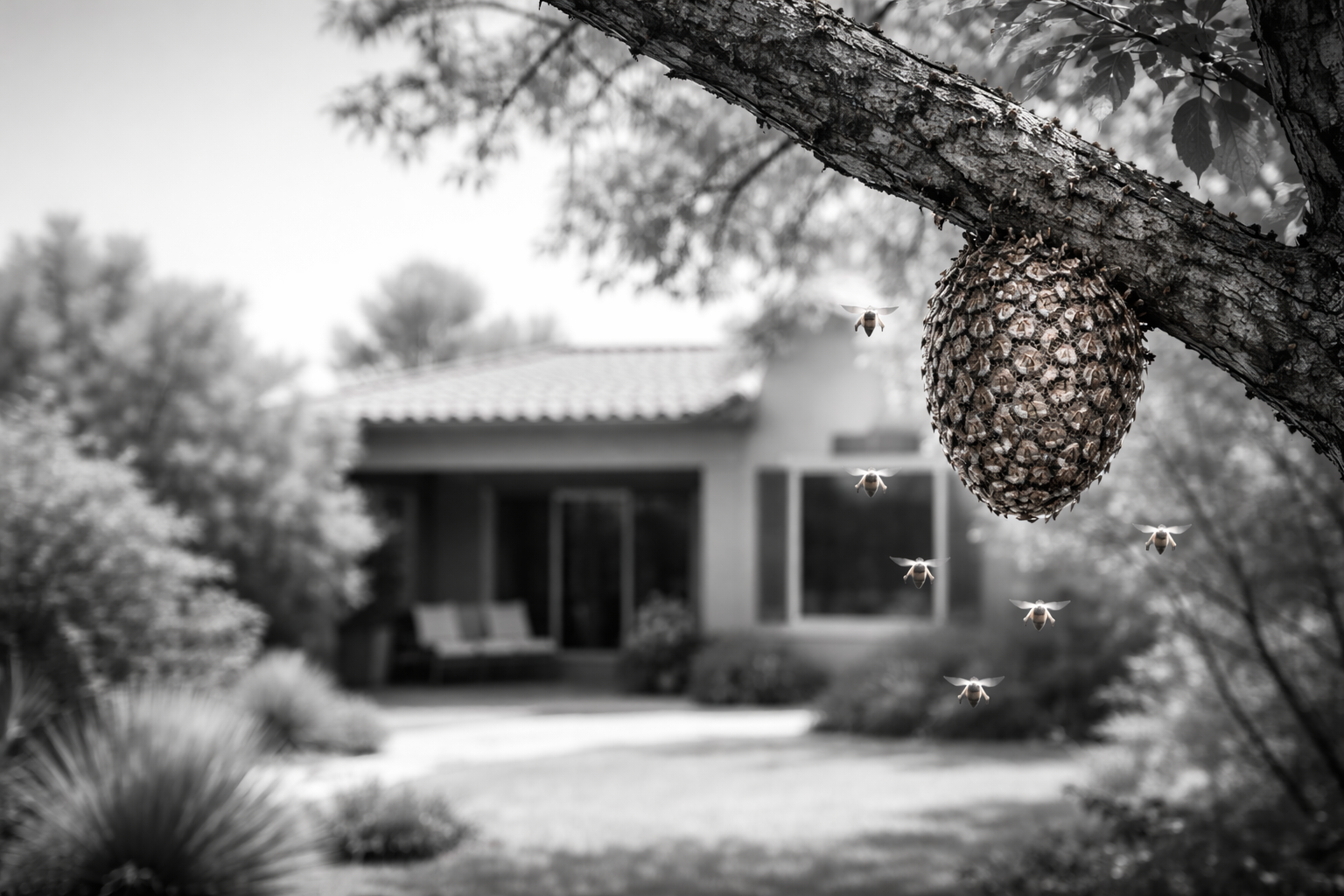
Most people’s instinct when they spot a hive is to handle it fast. Grab a can of spray, knock it down, seal the hole. That instinct is understandable and almost always makes things worse.
Bee removal Tempe isn’t complicated when you know what you’re dealing with. It gets complicated when someone acts before they do.
Step One: Stop and Assess
Before anything else, answer these three questions.
Where exactly is the hive? An exposed hive under an eave is a very different situation from bees consistently entering a crack in your stucco or a gap near a vent. Visible hive versus wall void changes everything about the right approach.
How long has it been there? A fresh swarm that landed yesterday may move on within 24 to 48 hours. An established colony that’s been building comb inside a wall void for weeks will not.
Is anyone in your household allergic? If yes, treat this as urgent regardless of hive size or location.
What Not to Touch
This section matters more than most homeowners realize.
Do not spray anything into a wall void. Consumer insecticide sprayed into an active hive inside a wall kills bees but leaves pounds of honeycomb and honey behind. That material ferments, attracts other pests, and can seep through drywall. The smell alone can last months. You’ve traded a bee problem for a rot and pest problem.
Do not seal the entry point while bees are active. Blocking the entrance traps the colony inside and forces them to find another exit, which sometimes means through the interior of your home.
Do not disturb the hive with vibration. Lawn mowers, leaf blowers, and weed trimmers near an active colony are common triggers for defensive behavior. Keep the area clear until the situation is handled.
Do not attempt removal without proper gear. This applies even to “small” hives. Honey bees in Arizona are frequently Africanized, which changes their defensive threshold significantly.
Honey Bees vs. Wasps: It’s Not the Same Fix
Homeowners often call any stinging insect “bees.” The distinction matters because the treatment approach differs.

Honey bees form true colonies with comb, honey, and thousands of workers. Removal involves the physical colony, not just the insects. Leaving comb behind after extermination is a common mistake that guarantees return visits from other colonies drawn to the scent.
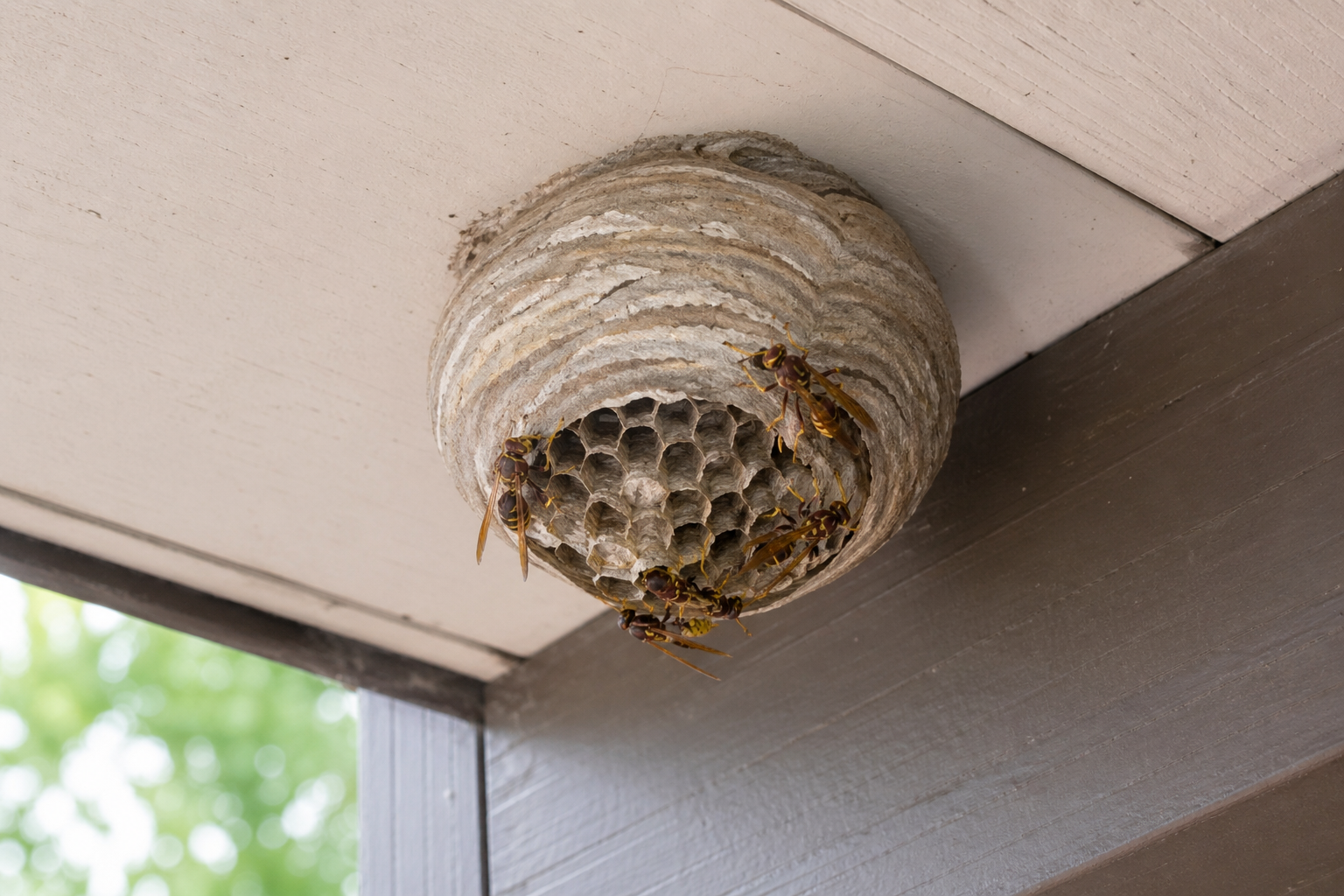
Wasps and yellowjackets nest differently, behave more aggressively when disturbed, and don’t produce honey comb. Treatment is more straightforward but still requires knowing what you’re dealing with before you act.
If you’re not sure which one you have, the safety rules above apply to both.
Signs the Colony Is Already Inside Your Walls
This is the scenario that catches homeowners off guard.
Watch for bees consistently entering and exiting a single small opening, a crack in stucco, a gap around a pipe penetration, or a space near a soffit. A steady flight pattern in and out of one point is the clearest indicator.
Buzzing sounds inside walls, particularly in the late afternoon when colony activity peaks, suggest an established interior hive. Honey staining or a faint sweet smell near an interior wall is a later-stage sign that comb has been building for some time.
Bees appearing inside the home near windows and lights, without an obvious entry point, usually means the colony is inside the structure and workers are finding their way through gaps into living spaces.
What Professional Bee Removal Actually Involves
A proper removal starts with confirming species and locating the colony accurately before anything else is done.
For accessible exterior hives, removal is relatively straightforward: the colony comes out, comb is removed, and the area is treated and sealed to prevent recolonization.
For interior wall hives, the process is more involved. Access is required to reach the comb, which sometimes means opening the wall. The alternative, treating in place without removing comb, creates the fermentation and secondary pest problem mentioned earlier. Any professional recommending treatment without comb removal for an established interior colony is cutting a corner you’ll pay for later.
After removal, entry point sealing and recommendations for structural repairs are part of a complete job. A hive that was accessible once will be accessible again without those repairs.
Reducing the Chances It Happens Again
Bees scout for nesting sites before committing. Properties with open gaps, accessible voids, and water sources nearby are more attractive than those without.
Seal gaps around exterior trim, utility penetrations, vents without screens, and anywhere you can see daylight from inside. Address irrigation leaks and standing water near the structure. Check eaves, patio covers, and sheds in spring and early summer when swarming activity peaks in Tempe. Catching a fresh swarm early, before it commits to a nesting site, is the lowest-cost outcome.
Alpha Pest Solutions handles bee removal in Tempe with the goal of solving the problem completely, not just addressing what’s visible. If you’ve found a hive or suspect bees are inside your structure, call or text us and we’ll assess it correctly from the start.