Blog
Pigeon Control in Tempe: How to Keep Them Away
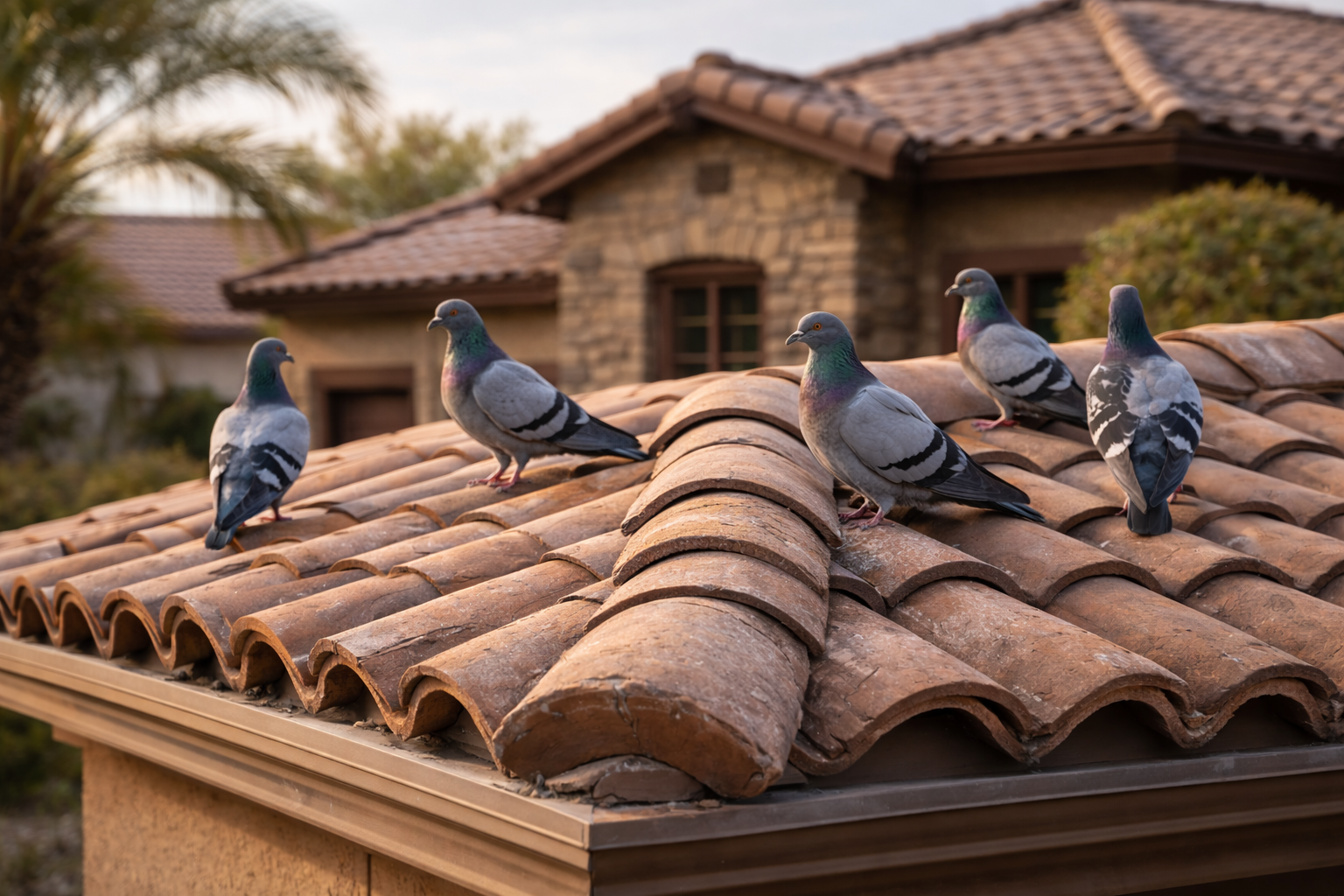
Nobody calls about pigeon control in Tempe the first day birds show up. They call after six months of droppings on the patio furniture, after the smell drifts into the garage, and after finding a nest wedged behind the solar panels.
If you’re at that point, you’re not alone. Pigeons are a common pest in Tempe, and the longer they go unaddressed, the more entrenched they become.
Here’s what’s actually happening on your roof and what it takes to fix it permanently.
Why Pigeons Won’t Leave on Their Own
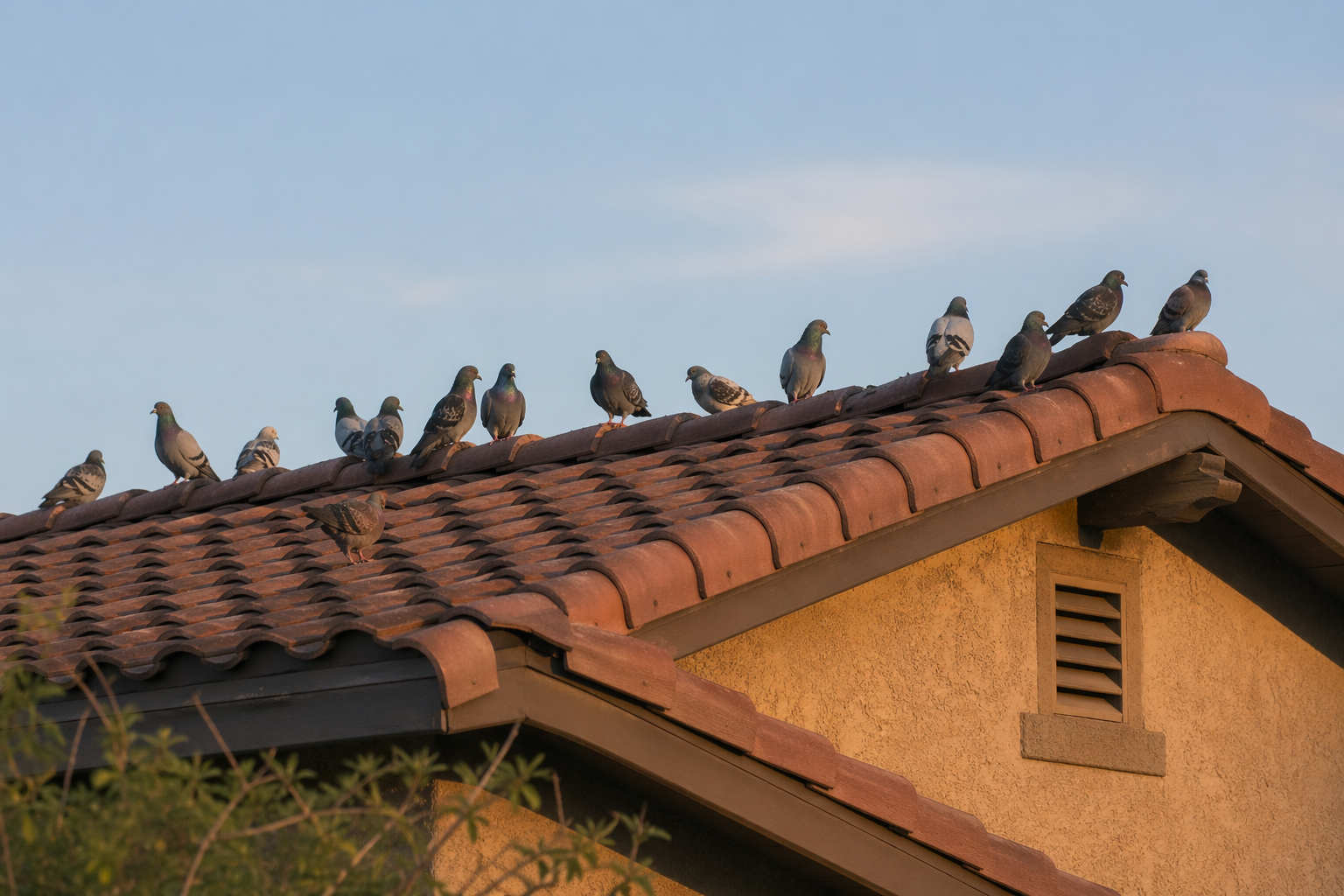
Pigeons are deeply rooted in their habits. Once a flock identifies your roofline as a reliable roosting site, they return to the same landing zones day after day, year after year. Juvenile birds learn from adults, which means a two-bird problem in spring can become a ten-bird problem by fall.
They’re not there randomly. Your roof is offering something specific: flat, protected ledges along parapets or roof edges; shaded cover under tile transitions or near HVAC platforms; consistent approach angles they’ve memorized; and proximity to food and water sources nearby.
Remove those attractors and block those landing zones, and they move on. Leave any one of them in place, and they come back.
The Real Damage
Most homeowners consider pigeons to be a mess problem. They’re actually a structural and health problem that make a mess. And that’s why pigeon control in Tempe has become one of the most requested pest services we provide.
Pigeon droppings are highly acidic. On roofing materials, around solar panel mounts, and along parapet caps, that acidity causes corrosion and staining that worsens over time. Gutters fill with nesting material and droppings, creating drainage failures that send water into places it shouldn’t go.
The health side gets overlooked even more. Dried pigeon droppings become airborne particulate when disturbed. Pigeon nests harbor mites and parasites that can migrate into a structure once birds are removed without proper sanitation. This is why cleanup isn’t optional. It’s the first step.
For homeowners with solar panels, the risk compounds. Pigeons nest aggressively under solar arrays because the panels provide ideal covered shelter. The nesting material traps moisture against the roof surface, and the birds’ activity around the mounting hardware creates real potential for damage. Solar pigeon exclusion is a specific application that requires the right materials and approach to protect both the roof and the panels.
What Doesn’t Work
Many homeowners in Tempe purchase the fake owl. It works for about two days until the pigeons realize it hasn’t moved. Pigeons are difficult to fool with static deterrents, and occasional harassment does not scare them off.
Hosing the roof down removes the visible mess but does nothing about the behavior. The birds circle, wait, and return as soon as the coast is clear.
Partial deterrent installation is where most DIY attempts fail. Putting bird spikes along one section of a parapet while leaving three feet of open ledge next to it accomplishes nothing except moving the roosting spot three feet. Pigeon exclusion only works when it’s comprehensive. They will find the gap.
What a Real Pigeon Control System Looks Like
Effective pigeon control in Tempe follows a sequence. Skip a step and the results don’t hold.
The first step is removal and sanitation. All nesting material comes off the roof, and the affected areas get treated. This method eliminates the odor and residue that continue to signal “this is a safe roosting site” to returning birds and new ones scouting the area.
The second step is a landing zone assessment. This is the part that separates a professional job from a hardware store attempt. Every roof has a specific set of surfaces pigeons are actually using and the approach angles they favor. Treatment that doesn’t map to those specific zones wastes materials and leaves the problem partially intact.
The third step is deterrent installation matched to the structure. Bird spikes work well on narrow ledges when installed at the correct spacing with complete coverage. Exclusion netting is the right tool for larger voids, open covered patios, and under solar arrays. Wire tension systems suit certain ledge profiles better than spikes. The right choice depends on your specific roof design and where the birds are actually nesting.
The fourth step is access closure. If pigeons are getting into a covered patio, under eave overhangs, or into a roof void, physical deterrents on the exterior aren’t enough. Those access points need to be sealed, or the birds will simply relocate inside the structure.
Tempe Pigeon Removal Starts With These Steps Before We Arrive
Don’t feed birds anywhere on the property, including unintentionally through accessible trash or pet food left outside. Remove standing water sources if any exist near the roofline. If you have solar panels and suspect nesting underneath, don’t attempt to remove it yourself. The combination of electrical components, roof surface, and compacted nesting material makes DIY removal a real risk for damage.
The other thing worth knowing: pigeon problems are significantly easier and less expensive to solve before nesting cycles expand. If you’re seeing regular roosting activity and it’s been weeks, act now rather than in three months.